
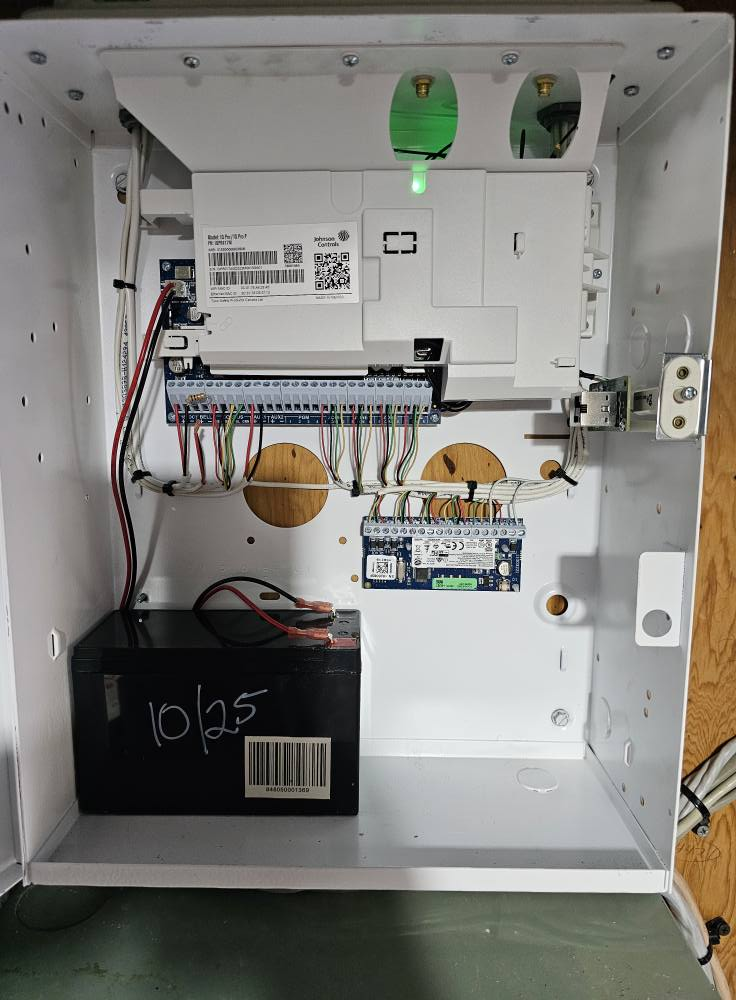
Wire Your Home for Security and Connectivity
Low voltage wiring installed throughout Billings and surrounding areas homes to support cameras, security systems, and smart devices.
Your home in Billings and the surrounding areas needs wiring that supports cameras, security panels, and smart home devices without cluttering walls or relying solely on fragile wireless signals. Low-voltage wiring installed during construction as a pre-wire, or retrofitted into an existing home, creates a stable foundation for systems that require consistent power and data transmission. You get an infrastructure that works now and supports future devices without the need for major rewiring.
For new builds, pre-wiring allows everything to be installed cleanly before drywall goes up, giving you better placement options, improved performance, and a cleaner finished look. It also ensures your home is ready for security, cameras, and smart automation from day one.
I install low-voltage wiring for security systems, camera networks, and smart home integration. Wiring is routed through walls, attics, and crawl spaces to keep it concealed while remaining accessible for future expansion. The work is planned around your current devices and the systems you may add later, helping you avoid patchwork installations that create weak points or limit functionality.
Contact me to discuss low-voltage wiring or pre-wire options for your home in Billings or the surrounding areas.
Clean Runs Built for Long-Term Reliability
Installation begins with mapping wire paths from each device to control panels, routers, or power sources. For new construction, this planning happens during the framing stage to ensure optimal routing before walls are finished. In existing homes, I run wiring through interior walls or along exterior surfaces depending on the structure.
Cable is secured at regular intervals to prevent sagging and labeled at both endpoints for easy identification during troubleshooting or future expansion. Conduit is used where additional physical protection is necessary.
Once the wiring is in place, your devices connect reliably without signal drops or power interruptions. Cameras stay online, security panels communicate consistently with sensors, and smart home controls respond without delay. You’ll notice more stable performance across all connected devices and fewer issues related to weak wireless signals or frequent battery replacements.
Your system can be expanded by adding new wiring runs to additional rooms or devices. Whether pre-wired during construction or added later, I design installations with future needs in mind so adding cameras, sensors, or smart devices doesn’t require opening finished walls or starting from scratch.
Local support is available for service calls, upgrades, and adjustments as your needs evolve.
Common Concerns About Low Voltage Wiring
Homeowners often ask how wiring is hidden, what happens during renovations, and whether older homes can support low voltage systems. These questions help clarify what the installation process involves.
What types of systems use low voltage wiring?
Low voltage wiring supports security systems, camera networks, doorbells, smart thermostats, lighting controls, and audio systems. Any device that needs stable power or data transmission benefits from hardwired connections.
How is wiring concealed in existing homes?
Wiring is routed through attics, basements, and wall cavities whenever possible to keep it protected and visually unobtrusive.
Can low voltage wiring be installed during a remodel?
Yes, remodels provide ideal access for running new wiring before drywall is installed. Integrity Integrations coordinates with contractors in Billings and surrounding areas to install wiring at the right stage of construction.
What happens if I want to add devices later?
New wiring runs can be added to support additional devices. Systems designed with expansion in mind include extra capacity at control panels and accessible wire paths for future connections.
How long does installation take?
Installation time depends on the size of your home and the number of devices being wired. Most residential low voltage installs in Billings and surrounding areas are completed in one to two days.
What are prewires and when should they be installed?
Prewiring involves running low-voltage wiring through your home during construction or renovation so future devices—like cameras, security sensors, and smart home equipment—can be added easily without opening walls later.
Low-voltage wiring I install provides your home in Billings and the surrounding areas with a reliable foundation for security and smart home systems. Reach out to schedule a wiring consultation.